
Is Flying Safe? Turbulence, Statistics and Safety Data
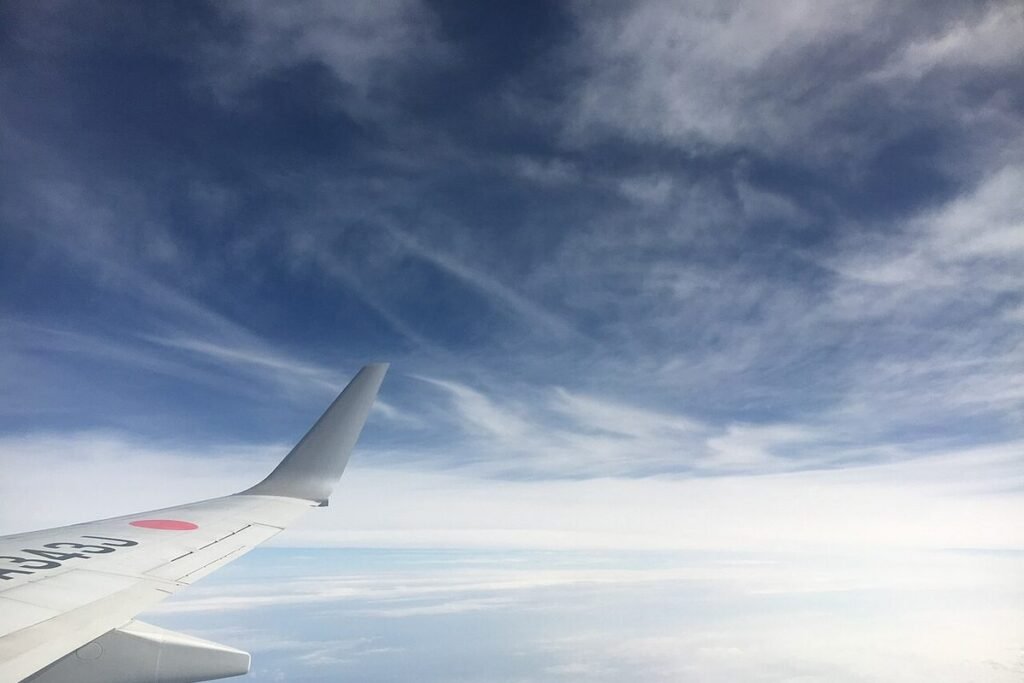

Is flying safe? By every long-run measure, commercial air travel is the safest way to cover long distances: IATA counted 51 accidents across 38.7 million flights worldwide in 2025, 8 of them fatal. The year was worse than the five-year average for fatalities, and turbulence keeps injuring people who are out of their seats. The numbers, and where to check them yourself, follow.
IATA’s 2025 numbers: 51 accidents in 38.7 million flights
IATA’s annual safety report counts accidents on commercial flights worldwide, from hull losses to serious damage, whether or not anyone was hurt. The 2025 report, published in March 2026, compares like this:
| Measure | 2025 | 2024 | 2021–2025 average |
|---|---|---|---|
| Flights | 38.7 million | 37.9 million | 34.5 million |
| Total accidents | 51 | 54 | 44 |
| Accidents per million flights | 1.32 | 1.42 | 1.27 |
| Fatal accidents | 8 | 7 | 6 |
| On-board fatalities | 394 | 244 | 198 |
| Fatality risk per million flights | 0.17 | 0.06 | 0.12 |
Two details matter. IATA member airlines had an accident rate of 0.72 per million flights in 2025, about half the global figure. And turboprops ran far higher than jets: 4.08 accidents per million flights against 1.03.
Fatality risk of 0.17, in plain numbers
Fatality risk measures how many “full-loss equivalents” happen per million flights, meaning how often a flight ends with everyone on board killed, adjusted for accidents where only some die. At 0.17 per million, a passenger would have to fly about 5.9 million flights to expect to be in such an accident. Taking one flight a day, that is roughly 16,000 years.
The rate moves a lot from year to year because the numbers are small. A single crash of a full widebody can double the yearly fatality count, which is what happened in 2025. The January midair collision near Washington National Airport and the June crash of an Air India 787 in Ahmedabad account for much of the jump. That’s why safety analysts look at five-year averages and long-term trends before drawing conclusions from one year.
Turbulence: injuries rather than crashes
Modern airliners are built to take far more stress than turbulence puts on them. The risk is to the people inside. The NTSB’s study of US airline accidents from 2009 through 2018 found turbulence behind more than a third of all Part 121 accidents, and most of those involved a serious injury with no damage to the aircraft. Flight attendants made up nearly 80 percent of the injured, because they are on their feet when it hits. Most of those injuries happened below 20,000 feet near thunderstorms.
FAA data for 2009 through 2022 counts 163 serious turbulence injuries on US commercial flights; only 34 were passengers. Deaths are very rare. The most cited recent case is the Singapore Airlines Boeing 777 that hit severe turbulence over Myanmar in May 2024, where one passenger died and dozens were hurt.
Clear-air turbulence and the seat belt
Convective turbulence around storms shows up on radar and in forecasts. Clear-air turbulence, often near the jet stream, gives no visual cue, which is why a crew can leave the seat belt sign off and still hit a jolt. Pilots share reports, called PIREPs, so the flights behind them can change altitude, and the same products appear on aviation weather sites. The habit that prevents most passenger injuries is a loose belt worn the whole time you’re seated.
Light, moderate, severe: the pilot’s scale
Pilots grade turbulence on a four-step scale. Light turbulence causes slight changes in altitude or attitude; drinks ripple and walking is still easy. Moderate turbulence pushes people against their belts and makes walking hard, and unsecured carts move. Severe turbulence causes large, abrupt changes in altitude and attitude, with momentary loss of control and loose objects flying around the cabin. Extreme turbulence, the fourth step, is rare in airline service. Most of what passengers describe as “terrible” is light to moderate on that scale.
In a Cessna 172, I feel moderate chop on a summer afternoon below a line of cumulus that an airliner would barely register. Size and wing loading matter: a heavy jet rides through air that tosses a light airplane around.
The US airline record since 2009
Between the Colgan Air crash near Buffalo in February 2009 and January 2025, US passenger airlines went through a long stretch without a crash killing dozens of people, while carrying billions of passengers. The midair collision over the Potomac in January 2025, between a regional jet on approach to Washington National and an Army helicopter, killed 67 people and was the deadliest US airline accident since 2001.
The NTSB’s investigation focused on helicopter routes near the airport and on how traffic was separated, rather than on the airliner itself. The FAA restricted helicopter traffic in the area afterward. That pattern repeats in most major accidents: the fix lands in procedures and airspace design, then spreads to other airports.
Where to read accident data yourself
- NTSB CAROL. The NTSB’s search tool for its investigation database. Filter by date, aircraft, operator type or state. Preliminary reports usually come out within a few weeks; final reports with probable cause often take 12 to 24 months.
- Aviation Safety Network. A database of airliner accidents worldwide, run by the Flight Safety Foundation, with summaries going back decades.
- The Aviation Herald. Short reports on incidents as well as accidents: engine shutdowns, diversions, runway excursions, smoke in the cabin. It shows how often things go wrong and end well.
- IATA’s annual safety report. The global rates by region and aircraft type, released each spring.
Flight-tracking data adds context to every report. The ADS-B track from Flightradar24 or ADS-B Exchange often appears within hours, showing altitude, speed and the path flown, long before an official finding. Specialist aviation news outlets explain the technical side without the speculation that fills the first day of TV coverage.
Airliners vs light aircraft
Airline flying and private flying are different worlds. Part 121 airlines fly with two trained pilots, dispatchers, maintenance programs and layers of oversight. Private pilots like me fly under Part 91 with one pilot, often in a forty-year-old single-engine plane. Per flight hour, general aviation’s fatal accident rate runs many times higher than the airlines’. Most of those accidents trace back to pilot decisions: continuing into bad weather, running out of fuel, losing control at low speed.
I watch the NTSB reports on light aircraft more closely than the airline ones. They read like a list of mistakes to avoid on a Saturday morning flight.
Crew training and cabin habits
Every airline pilot trains for engine failures, rejected departures and emergency descents in a full-motion simulator at least once a year. Each flight attendant requalifies on evacuations, fire fighting and first aid annually, which is why the safety briefing is not a formality to them.
A few passenger habits improve the odds in the rare bad moment:
- Count the rows to the two nearest exits; smoke can hide the floor lighting.
- Keep shoes on for departure and landing, the phases where most accidents happen.
- Leave bags behind in an evacuation. Evacuation standards assume 90 seconds to empty the cabin, and luggage in the aisle breaks that.
- Keep the belt fastened while seated, even with the sign off.
FAQ
Is flying safer than driving?
Yes, by a wide margin per mile traveled. US road deaths run in the tens of thousands each year, while fatal accidents on US airlines are rare enough that a single one dominates the yearly statistics. The comparison holds even in a bad year like 2025.
Can turbulence make a plane crash?
Turbulence on its own almost never brings down a modern airliner, which is built to take loads well beyond what rough air produces. The danger is injury to people who are standing or unbelted. Flight attendants are the most frequent victims for that reason.
Which seat is safest on a plane?
No seat is safe or unsafe in a consistent way, because every accident is different. Seats within a few rows of an exit shorten the path out in an evacuation. Over the wing, passengers feel turbulence less than at the tail.
How many plane crashes happened in 2025?
IATA counted 51 accidents worldwide on commercial flights in 2025, 8 of which were fatal, with 394 people killed on board. That came from 38.7 million flights. Most of the accidents involved no deaths at all.
Keep exploring
- Air TravelBest Websites for Finding Cheap Flights
- Air TravelSeatGuru Alternatives: Where to Check Seat Maps Now
- Air TravelFlight Delayed or Canceled? Your Refund Rights in the US
- Aviation CareersAirline Pilot Salary in 2026: Regional to Major
- Aviation News & MediaBest Aviation Podcasts for Pilots and Fans
- Flight SimulatorsFree Flight Simulators You Can Fly Today
- Flight TrackingHow Flight Tracking Works: ADS-B