
How to Become a Flight Attendant: Requirements and Pay
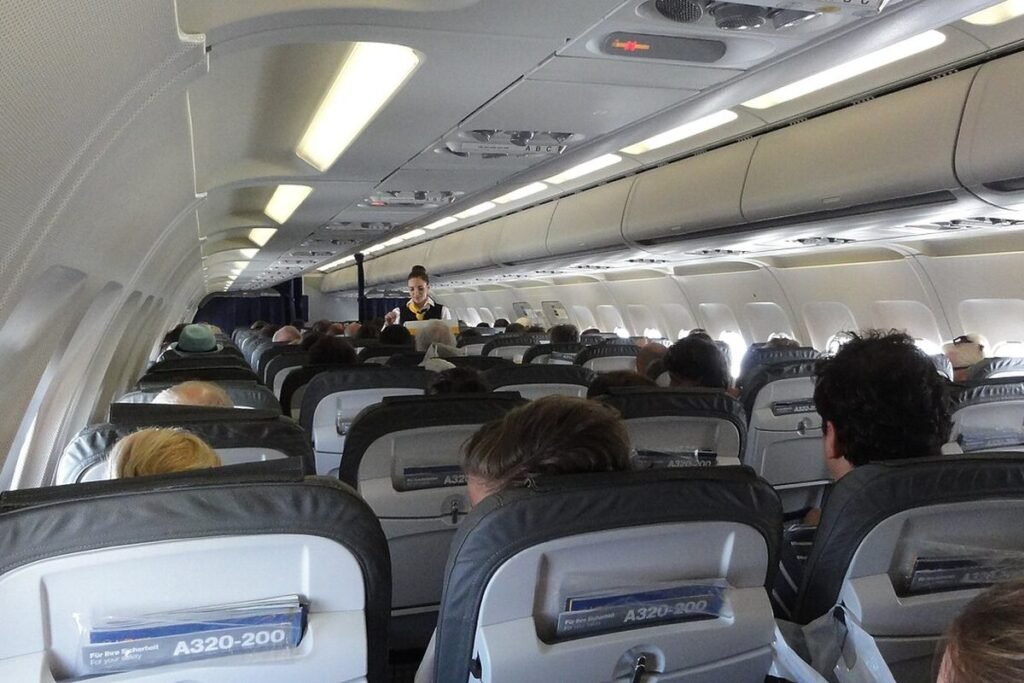

To become a flight attendant in the US, you meet an airline’s basic requirements, typically a minimum age between 18 and 21, a high school diploma, a valid passport and a reach test, then pass its online assessment and interviews and complete several weeks of training. Graduation earns the FAA Certificate of Demonstrated Proficiency. BLS put the median pay at $63,580 in May 2025, though pay depends heavily on seniority and the hours you fly.
Baseline requirements
Each airline sets its own list, but most look alike:
- Age. Usually at least 18, 20 or 21 depending on the airline; alcohol service and international layovers push some carriers to 21.
- Education. A high school diploma or GED. A degree helps but is not required.
- Passport. Valid, with the right to travel freely to every country the airline serves, and to return to the US.
- Height or reach. Airlines test whether you can reach the overhead safety equipment, often on tiptoe, and some set a maximum height for the cabin ceiling.
- Background. A fingerprint-based criminal history check, drug testing and an employment history going back years.
- Experience. BLS notes that most new hires have one or two years in a service job, such as customer service, hospitality or retail.
A second language is a plus at airlines with international networks, and some hire speakers of specific languages for certain routes.
Application, video interview and the in-person day
Airlines open job postings for a few days at a time and close them once applications pile up. The usual sequence:
- An online application and a short assessment of service scenarios.
- A recorded video interview, with questions on screen and a minute or two for each answer.
- A live interview day, in person or virtual, with group exercises and one-on-one questions.
- A conditional job offer, followed by the background check and drug test.
Interviewers look for calm, clear communication and real examples. A good answer to “tell me about a time you handled an angry customer” names the situation, what you did and how it ended, in under two minutes.
Airline training: several weeks of drills
Initial training runs several weeks, at the airline’s training center. Arrangements during training differ between airlines: some pay a stipend or hourly rate, others pay nothing until graduation, and many provide lodging. Ask before you accept the class date.
The content is mostly about safety: evacuation drills on cabin mockups, slide and door operation, ditching and life rafts, fire fighting with real extinguishers, first aid and CPR, security procedures, and the systems of each aircraft type the airline flies. Service training is a smaller part. Trainees must pass written tests and hands-on evaluations, and failing one can end the class.
The FAA Certificate of Demonstrated Proficiency
When you finish training, the FAA issues a Certificate of Flight Attendant Demonstrated Proficiency. It lists the aircraft groups you are qualified on, such as propeller aircraft or turbojets. You can’t earn it on your own or at a private academy; it comes only through an airline’s FAA-approved training program.
The certificate stays with you if you change airlines, but each new employer puts you through its own training. Every year after that, flight attendants complete recurrent training, and they need new training for each new aircraft type.
Pay structure: flight hours, not hours at work
Flight attendants are paid an hourly rate for flight time, traditionally counted from pushback at the origin to arrival at the destination gate. Boarding, briefing, delays at the gate and time between flights were historically unpaid. A typical paycheck combines:
- the hourly flight rate, which climbs each year of seniority;
- a monthly minimum guarantee, especially for reserve flight attendants;
- per diem for every hour away from base;
- premiums for working international flights, lead positions or languages.
Take a hypothetical new hire paid $35 an hour who flies 80 hours in a month: that’s $2,800 in flight pay before per diem. The same 80 flight hours can easily mean 200 hours away from home.
Boarding pay: Delta, American and United
Boarding pay has changed the math. Delta, which is not unionized for flight attendants, introduced it in June 2022 at 50 percent of the hourly rate for boarding time. American added boarding pay at 50 percent of the hourly rate in the contract its flight attendants ratified in September 2024. United’s flight attendants ratified a five-year contract on May 12, 2026, with an average 31 percent raise, retroactive pay and boarding pay that the union values at 7 to 8 percent of overall compensation.
When comparing offers, check whether boarding pay applies to every flight or only some, and whether ground delays are paid.
Reserve, seniority and bases
New flight attendants start on reserve: on call for a set number of days a month, with a guarantee but no fixed schedule. They get the junior bases, the holiday trips and the late-night turns. As seniority builds, they bid for lines with chosen days off, better trips and eventually a preferred base. Many commute by air to base, flying standby on their own airline.
The job has physical demands that recruiters mention for good reason. Flight attendants are the cabin crew most exposed to turbulence injuries, because they are standing when it hits, and long duty days around each flight delay are part of the routine. I watch the cabin crew handle a full flight on almost every trip I take as a passenger, and the job looks easy only because they’re good at it.
Uniform, grooming and appearance rules
Airlines publish appearance standards and enforce them from the first interview. They cover the uniform pieces you must wear, hair length and color, makeup, jewelry, nails and visible tattoos or piercings. Rules on tattoos have loosened at several large carriers in recent years, but some still require covering ones visible in uniform. Read the airline’s careers page before the interview day, since showing up in a way that breaks the standard is an easy way to lose a spot.
Uniforms are usually provided at hire, with an allowance or replacement schedule later. Bags, shoes and some accessories may come out of your own pocket.
Regionals vs mainline airlines
Regional airlines hire more often, with shorter waits between application and class, and they’re a common first job. Pay scales are lower and the aircraft smaller, often with a single flight attendant on a 50- or 76-seat jet. Mainline carriers pay more, fly larger aircraft with bigger crews and offer international flying, but competition for each posting is intense.
The travel benefits draw many applicants. Free or reduced standby travel for the employee and family is standard, which beats hunting for cheap flights every vacation. Flight attendants work closely with each airline pilot on the crew; the median pilot salary is several times higher, but the training path is far shorter and carries no debt. Some flight attendants later train to become pilots, and a few move into dispatch or even apply to become an air traffic controller.
FAQ
How many months does flight attendant hiring and training take?
From application to first flight usually takes a few months. The hiring process can take weeks to months depending on the airline, and initial training lasts several weeks. Most new hires then spend their first months on reserve.
Do flight attendants get paid for training?
It depends on the airline. Some pay a stipend or an hourly rate during initial training, while others pay nothing until graduation and provide lodging only. The terms appear in the job offer, so check them before accepting a class date.
Are flight attendants paid when the plane is on the ground?
Traditionally, the hourly clock runs only from pushback to block-in at the next gate. Delta, American and now United pay boarding pay at part of the hourly rate. Time between flights and most ground delays are still unpaid at many airlines.
Is there a height requirement for flight attendants?
Most airlines use a reach test instead of a strict height range: you must be able to reach overhead safety equipment. Some also set a maximum height so crew can move safely under the cabin ceiling. Each airline publishes its own standard.
Keep exploring
- Aviation CareersHow to Become an Aircraft Mechanic (A&P License)
- Aviation CareersAirline Pilot Salary in 2026: Regional to Major
- Aviation CareersHow to Become an Air Traffic Controller
- Air TravelIs Flying Safe? Turbulence
- Aviation News & MediaAviation YouTube Channels Worth Subscribing To
- Flight SimulatorsFlight Sim Setup: Yokes
- Flight TrackingFlightradar24 vs FlightAware: Which Tracker Fits You?