
How to Become an Aircraft Mechanic (A&P License)
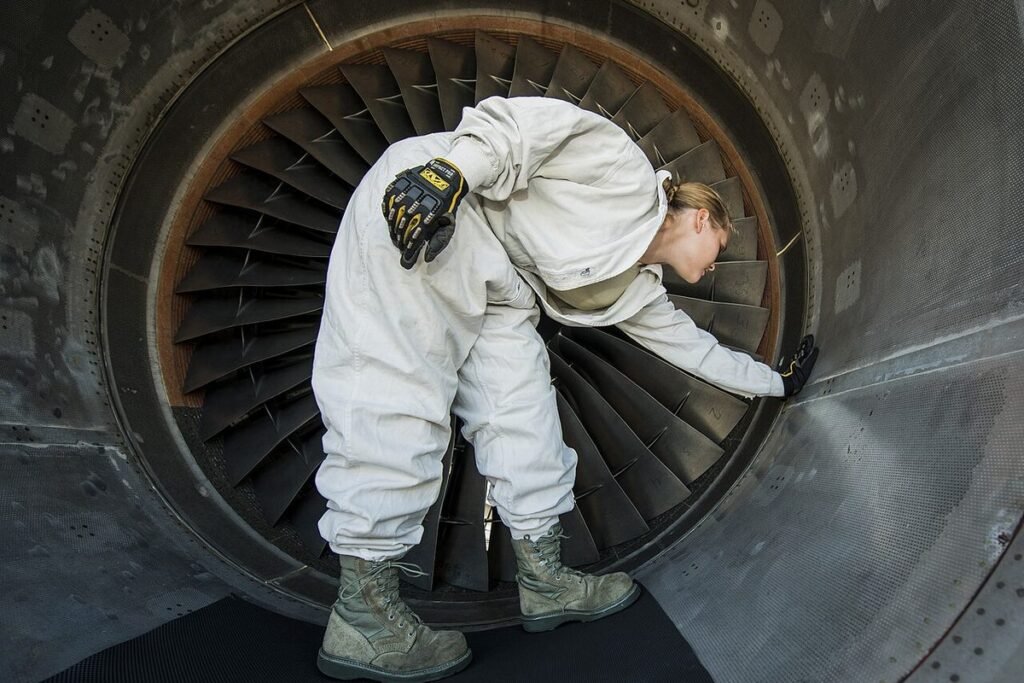

To become an aircraft mechanic in the US, you earn an FAA mechanic certificate with Airframe and Powerplant ratings, known as the A&P. There are two routes: graduate from an FAA-approved Part 147 school, or document 30 months of hands-on experience. Either way, you then pass three knowledge tests and an oral and practical exam with an FAA examiner. BLS put the median wage at $79,870 in May 2025, and $96,170 at the airlines.
FAA eligibility: 18, English, 24 months to finish testing
The basic requirements are short:
- at least 18 years old;
- able to read, write, speak and understand English;
- pass all required tests within 24 months;
- meet the experience or training requirement for at least one rating: Airframe, Powerplant, or both.
No medical certificate is needed, and the certificate itself costs nothing to issue. You pay for school, for the knowledge tests at a testing center and for the examiner’s oral and practical.
Route one: a Part 147 maintenance school
An Aviation Maintenance Technician School certificated under 14 CFR Part 147 teaches the full curriculum: general subjects such as math, physics, regulations, drawings and weight and balance, then airframe topics such as sheet metal, composites, hydraulics and landing gear, then powerplant topics such as reciprocating and turbine engines, propellers and fuel systems. Most full-time programs run around two years, and many sit inside community colleges, where tuition is far lower than at private academies.
The school route has three advantages. It is structured, it ends with a graduation certificate that proves eligibility without an FAA inspector reviewing your work history, and schools often host hiring days for airlines and repair stations. Some programs fold the knowledge tests into the course.
Route two: 30 months of documented experience
Without school, you qualify by working under supervision on aircraft. The FAA wants 18 months of practical experience for one rating or 30 months of concurrent experience for both. That experience has to be documented: pay records, letters from supervisors, logs of the work performed and the aircraft involved.
Before testing, you take that evidence and FAA Form 8610-2 to an aviation safety inspector at a Flight Standards District Office, who decides whether it meets the requirement. An incomplete file sends you back to collect more paper, so keep records from the first day. Military mechanics can also qualify through their service experience or the joint military training course.
The experience route pays you while you learn, which is its main appeal. The catch is breadth: a shop that only maintains piston singles won’t give you turbine experience, and the tests cover both.
The tests: General, Airframe and Powerplant
Knowledge tests
There are three computer-based knowledge tests: General, Airframe and Powerplant. Each allows up to two hours and needs 70 percent to pass. Questions follow the Airman Certification Standards for mechanics, in effect since July 31, 2023. Before testing, you create an FAA Tracking Number in IACRA. After a failure, you can retest after 30 days, or sooner with a signed endorsement from a certificated mechanic who has given you more training.
Oral and practical
The oral and practical tests are given by a Designated Mechanic Examiner, a private individual authorized by the FAA. Expect questions across every subject area and practical projects such as safety-wiring a fitting, inspecting a cylinder, writing up a maintenance record entry and finding a part number in a parts catalog. Covering both ratings usually takes more than a day. Examiners set their own fees, so ask for the full price before booking.
Pay: a $79,870 median, more at the airlines
BLS data for May 2025 breaks mechanic pay down by employer:
| Industry | Median annual wage, aircraft mechanics |
|---|---|
| Air transportation (airlines) | $96,170 |
| Couriers and express delivery | $90,190 |
| Aerospace product and parts manufacturing | $82,720 |
| Federal government | $76,210 |
| Support activities for air transportation | $72,910 |
| All aircraft mechanics and service technicians | $79,870 |
Avionics technicians earned a median of $82,280. About 140,000 people worked as aircraft mechanics and service technicians in 2025, and BLS expects around 13,100 openings a year for mechanics and avionics techs combined through 2035, mostly from retirements. At airlines, union contracts set hourly scales by years of service, with premiums for night shifts and licenses, and overtime is common during heavy checks.
Inspection Authorization after three years
The next step for many A&Ps is Inspection Authorization, or IA. It lets a mechanic sign off annual inspections and approve major repairs and alterations for return to service, the work that keeps private airplanes legal. To apply, you need:
- a current mechanic certificate with both Airframe and Powerplant ratings, held for at least three years;
- active work maintaining certificated aircraft for the two years before applying;
- a fixed base of operations where you can be reached during the normal work week;
- a passing grade on the IA written exam, with a 90-day wait before retesting after a failure.
An IA must renew every two years by showing ongoing inspection activity or training. Every airplane I’ve rented has needed an annual signed by an IA, and at a busy flight school that IA is the person who decides whether the fleet flies next week.
Tools, shifts and the first job
New mechanics are expected to own a basic tool set: sockets, wrenches, screwdrivers, safety-wire pliers, a torque wrench and inspection mirrors at minimum. Many schools sell a starter kit, and employers add specialty tools as the work demands. Building a full roll cab takes years and a good part of the first paychecks.
The first job usually comes with the worst schedule. Airline line maintenance happens overnight, when aircraft sit at the gate, and new hires start on nights and weekends until seniority moves them to days. Repair stations often run around the clock during heavy checks. General aviation shops keep normal hours but pay less. A first year spent on nights at a major airline base, collecting shift premiums and overtime, is a common way to pay off school debt quickly.
Where A&P mechanics work
- Airlines. Line maintenance on overnight shifts, heavy checks in hangars, the best pay and benefits, and seniority rules close to those of pilots.
- Repair stations (MROs). Third-party shops doing heavy checks, engines or components for many airlines.
- General aviation shops. Annuals, avionics installs and engine overhauls on piston singles and twins; broad work and lower pay.
- Corporate flight departments. A small team caring for a few business jets, often with travel.
- Helicopters, cargo and manufacturing. Medical helicopter operators, FedEx and UPS, and the production lines that build aircraft.
Some mechanics move into the cockpit later. A&P knowledge helps any pilot preparing for the FAA written test, and many who become a pilot after years in a hangar say the systems questions in ground school felt easy. The reverse happens too: an airline pilot who owns a small plane sometimes earns an A&P to sign off their own maintenance. Both sides of the hangar door feed into flight safety, and I trust the airplane a little more when the mechanic who signed it off is the one standing next to it.
Related reading: Airline Pilot Salary in 2026: Regional to Major · How to Become a Flight Attendant: Requirements and Pay
FAQ
How long does it take to get an A&P license?
A full-time Part 147 program usually takes around two years, then testing can be finished within weeks. The experience route requires 30 months of documented work for both ratings. All tests must be completed within 24 months.
Do aircraft mechanics need a degree?
No. The FAA requires a Part 147 school certificate or documented experience, not a college degree. Many schools offer an associate degree alongside the certificate, which can help with promotion later.
How much does an A&P mechanic make?
BLS put the median for aircraft mechanics and service technicians at $79,870 in May 2025. Mechanics at airlines earned a median of $96,170, the highest of any industry. Overtime and shift premiums can add to that.
Can you get an A&P license online?
Not entirely. Online courses can prepare you for the knowledge tests, but the FAA requires either hands-on experience or attendance at a Part 147 school, and the oral and practical exam is done in person with an examiner. Experience-based applicants also need an FAA inspector to approve their records.
Keep exploring
- Aviation CareersAirline Pilot Salary in 2026: Regional to Major
- Aviation CareersHow to Become an Air Traffic Controller
- Aviation CareersHow to Become a Flight Attendant: Requirements and Pay
- Air TravelSeatGuru Alternatives: Where to Check Seat Maps Now
- Aviation News & MediaBest Aviation Podcasts for Pilots and Fans
- Flight SimulatorsBest Flight Simulators for PC in 2026
- Flight TrackingHow to Listen to Air Traffic Control Online