
Airline Pilot Salary in 2026: Regional to Major
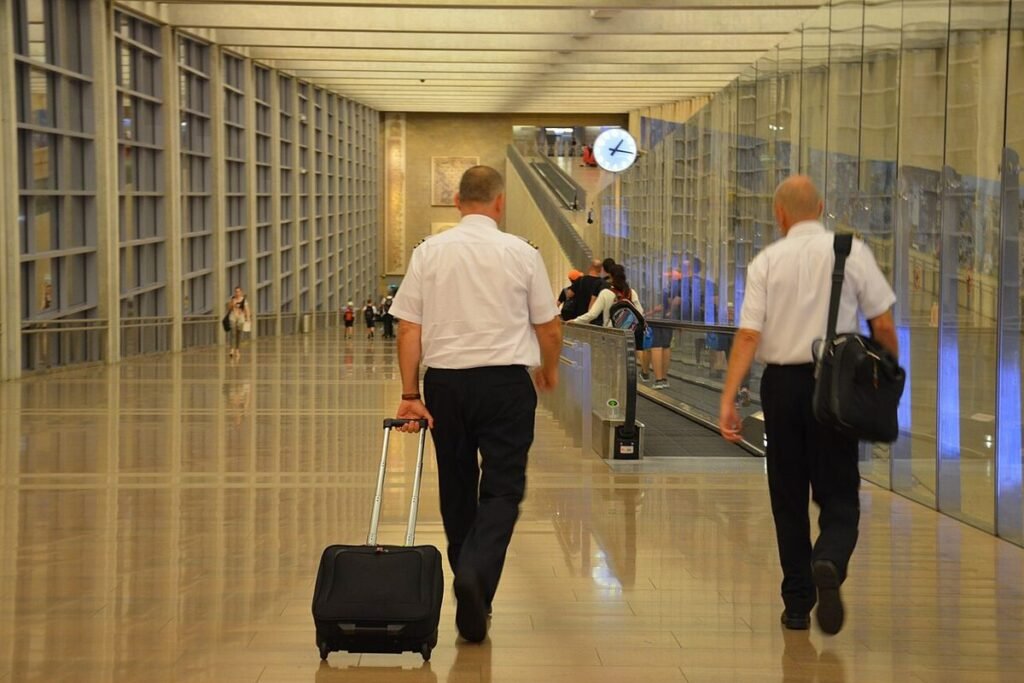

The median airline pilot salary in the US was $232,140 in May 2025, according to the Bureau of Labor Statistics. That single figure hides a huge spread: a first-year first officer at a regional airline may gross around $90,000 to $100,000, while a senior widebody captain at United, Delta or American can pass $400,000 in base pay alone. Seniority, aircraft size and the airline’s contract decide where you land.
BLS figures: $232,140 median for airline pilots
BLS splits pilots into two groups. Airline pilots, copilots and flight engineers had a median annual wage of $232,140 in May 2025. Commercial pilots, who fly charters, crop dusting, air tours, medical flights and corporate jets, had a median of $123,220.
About 104,600 people worked as airline pilots in 2025, and BLS projects 8 percent growth for that group through 2035. Counting commercial pilots, it expects about 16,400 openings a year on average, most of them from retirements. US airline pilots must retire at 65, and the large hiring classes of the late 1980s and 1990s are reaching that age now.
Hourly pay, credit hours and monthly guarantees
Airline pilots are paid by the credit hour, not by the year. A credit hour is roughly an hour of flight time, from the moment the aircraft leaves the gate to the moment it parks, plus credit for some duty and reserve time under the contract’s rules. Time spent on the ground between flights, in hotels and on the commute to base is mostly unpaid outside per diem.
Contracts set a monthly minimum guarantee: 65 credit hours at Delta, 70 at United and 73 at American for reserve pilots on long call. Many line pilots fly more. At about 900 credit hours a year, a pilot paid $118 an hour earns roughly $106,000 in base pay, before per diem, profit sharing and retirement contributions.
Regional first officers: year-one pay
Regional airlines fly the smaller jets, mostly 70- and 76-seat Embraer and CRJ models, under contract with the majors. They are where most new airline pilots start, usually with 1,500 hours or the restricted ATP minimums.
First-year pay at regionals rose sharply after 2022, when the pilot shortage pushed carriers to compete on wages and bonuses. Hourly rates differ a lot between carriers, and some advertise a rate with retention bonuses folded in. Once guarantees and bonuses are counted, year-one compensation commonly lands somewhere around $90,000 to $100,000 or more. Regional captains, a seat many pilots reached within a few years during the recent hiring wave, earn well into six figures.
The other thing regionals sell is a path. Wholly owned regionals such as Envoy, PSA and Piedmont have flow agreements to American, and Endeavor feeds Delta’s pilot pipeline. A flow program trades some choice for a guaranteed interview or seat at the mainline carrier. If I were starting out at 1,500 hours, I’d weigh that path as heavily as the hourly rate.
Major airline first officers and captains
Pay at the three largest network airlines, based on the contracts signed in 2023 and the rates in effect in 2026, looks roughly like this:
| Airline | Year-1 first officer | 12-year narrowbody captain | Senior widebody captain |
|---|---|---|---|
| United | about $125/hr | about $388/hr | about $480/hr |
| Delta | about $118/hr | about $388/hr | about $465/hr |
| American | about $113/hr | about $402/hr | about $465/hr |
A 12-year narrowbody captain crediting 900 hours makes about $350,000 in base pay; a senior widebody captain flying the 777, 787 or A350 makes more than $410,000 before extras. First officers at the majors rise fast in their first few years, since the pay scales climb by longevity every year until about year 12.
The 2023–2024 contracts and what’s next
The current scales come from a wave of new contracts after the pandemic:
- Delta pilots ratified their agreement in March 2023: an 18 percent raise at signing, then 4, 5 and 4 percent, about 34 percent over four years. It becomes amendable on December 31, 2026, so talks on the next one are under way.
- American pilots approved a contract in 2023 worth up to 46 percent over its term.
- United pilots ratified a deal in 2023 with pay increases of up to 40 percent.
- Southwest pilots followed with their own agreement in early 2024.
Each new contract becomes the benchmark for the next negotiation, which is why pilots at one airline watch every vote at the others.
Per diem, profit sharing and 401(k)
Base pay is only part of the package. Per diem pays a small hourly amount for every hour away from base, a few dollars an hour, a little more on international trips. On a four-day trip, that is a few hundred dollars that are largely tax-free.
Profit sharing can be large. Delta paid about 10 percent of eligible earnings for 2024 and close to 9 percent for 2025. Retirement contributions are the other big piece: major-airline contracts put company 401(k) contributions in the mid to high teens as a percentage of pay, with Delta at 18 percent from 2026, with no employee match required.
Seniority: bids, upgrades and switching airlines
Every pilot’s career is ruled by a seniority number, assigned on the date of hire. It decides which base you hold, whether you sit reserve, which trips you get, when you can take vacation in July and when you upgrade to captain. A pilot hired one week before you outranks you for the rest of both careers.
Seniority doesn’t transfer. A captain who leaves a regional for a major starts again as a junior first officer at the bottom of the list, with a pay cut for the first year or two. Pilots accept that because the long-term earnings at a major are far higher, and because each year spent at a regional is a year lost at the bottom of the mainline list.
Cargo, fractional and corporate cockpits
Passenger airlines are not the only top payers. FedEx and UPS fly widebodies on night schedules, and their senior captains earn in the same range as those at the passenger majors, with fewer passengers to deal with and more time in the dark over the Pacific. Seniority rules work the same way.
Fractional operators such as NetJets and Flexjet pay a salary rather than a strict hourly rate, with schedules built around blocks of days on and days off, often seven and seven. Pilots there don’t bid for routes; they go wherever the owners want to go that week. Corporate flight departments are smaller still, and pay varies with the company and the jet. These jobs fall mostly under the BLS commercial pilot group, with its $123,220 median.
Plenty of pilots pick these jobs for the schedule rather than the money. Being home every night or every other week can matter more than the extra $50,000 a year a major’s widebody seat might pay. The same trade-off shows up on the maintenance side, where an aircraft mechanic with an A&P certificate can pick line work at a hub or a nine-to-five hangar job.
Getting there: hours, ratings and debt
To become a pilot at an airline, you need an ATP certificate, which means 1,500 hours in most cases. Military pilots qualify at 750 hours, and graduates of approved aviation degrees at 1,000 or 1,250. The path starts with a student pilot certificate and a private pilot license, then the instrument rating, the commercial certificate and usually a flight instructor certificate to build hours.
The cost of flight training from zero to commercial pilot often runs into six figures at an academy, and much of it is borrowed. I’m a private pilot with 300 hours, a long way from the airline minimums, and most of those hours went into the same logbook one rental at a time. Instructors build their 1,500 hours faster, paid by their students, which is why so many airline pilots spent two years teaching first.
FAQ
How much do airline pilots make a year?
BLS put the median for airline pilots, copilots and flight engineers at $232,140 in May 2025. New first officers at regionals start far lower, while senior captains at major airlines can earn more than $400,000 in base pay. Profit sharing and retirement contributions come on top.
How much does a first-year pilot make?
At a regional airline, year-one compensation commonly lands around $90,000 to $100,000 once guarantees and bonuses are counted. A new first officer at United, Delta or American starts at roughly $113 to $125 an hour. At 900 credit hours a year, that's above $100,000.
Do pilots get paid for delays?
Pilots are usually paid from when the aircraft leaves the gate until it parks, so a delay on the ground at the gate is often unpaid. Many contracts include protections such as duty-time credit or minimum pay per day that soften long delays. The details differ by airline.
How long does it take to become an airline captain?
At a regional, upgrades have often come within a few years during recent hiring waves. At a major airline, a new hire can wait five to ten years or more, depending on the base, the aircraft and retirements. Seniority sets the pace.
Keep exploring
- Aviation CareersHow to Become a Flight Attendant: Requirements and Pay
- Aviation CareersHow to Become an Aircraft Mechanic (A&P License)
- Aviation CareersHow to Become an Air Traffic Controller
- Air TravelFlight Delayed or Canceled? Your Refund Rights in the US
- Aviation News & MediaBest Aviation News Websites to Follow
- Flight SimulatorsCan a Flight Simulator Help You Learn to Fly?
- Flight TrackingBest Flight Tracking Websites and Apps in 2026